Flores and Corvo: The Azores Nobody Books (But Should!)

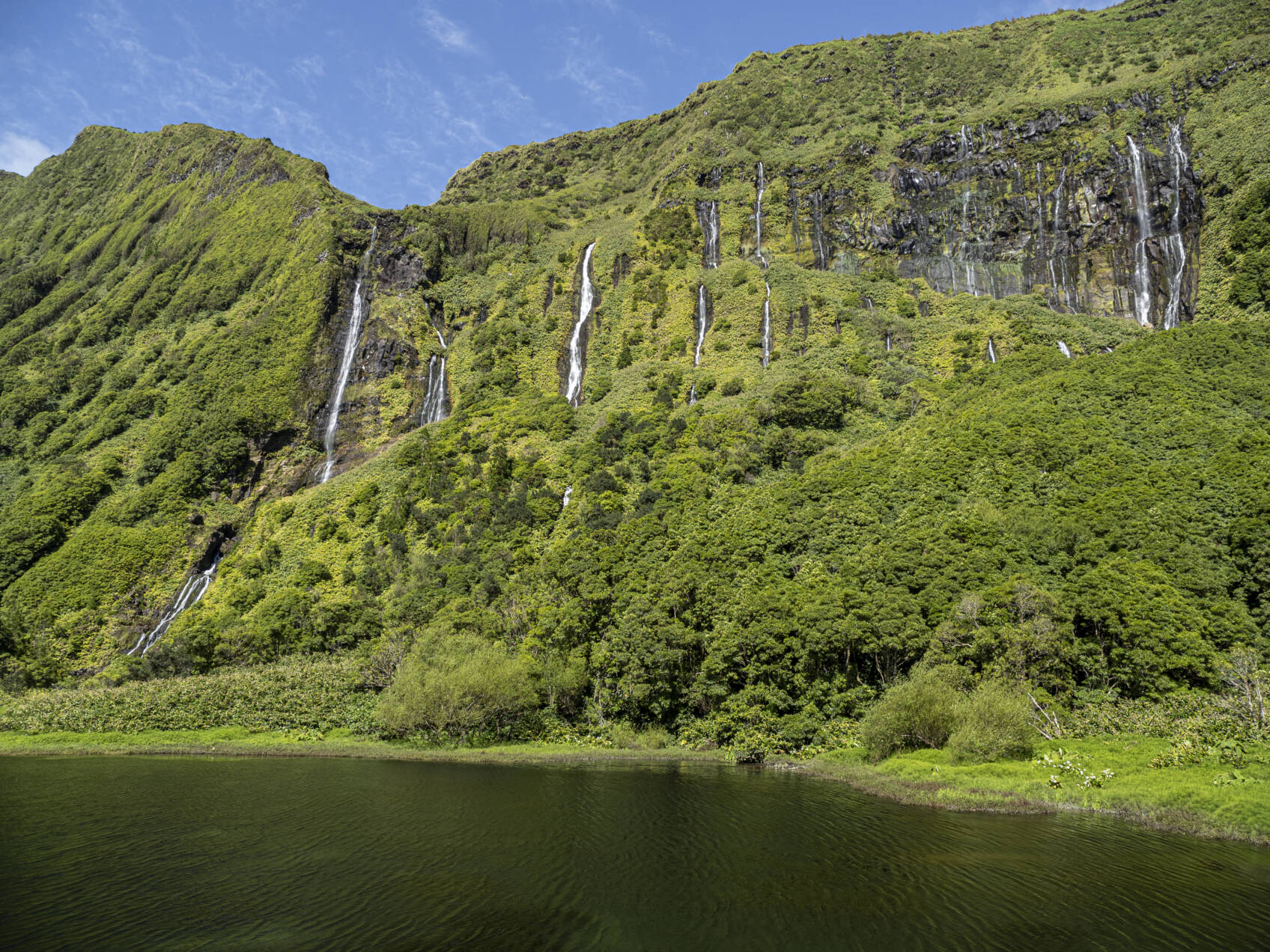
No airline flies to Flores from outside Portugal. You land in Ponta Delgada first, on São Miguel, then wait for a SATA Air Açores turboprop that takes ninety minutes to cross open Atlantic to an island covered in wild hydrangea. There’s even a waterfall visible from the runway!
Most people who visit the Azores never see it, because most people never leave São Miguel.
Nine islands, but one gets the tour buses and the others do not.
São Miguel earned its reputation fair and square, with geothermal pools at Furnas and direct flights from Boston and New York, but the westernmost pair, Flores and Corvo, sit far enough out that almost nobody bothers. In between, Faial and Pico share a channel where sperm whales still surface close to shore. If you have the time, these islands shouldn’t be missed on a trip to the Azores.
Flores: One Hotel, Seven Crater Lakes
There’s really one hotel worth booking on Flores. The Ocean Cliff sits on the channel facing Corvo, renovated a few years back, with a pool cut into the rock and sea views from most rooms. Think of it as a staging point for a landscape stacked with seven crater lakes, waterfalls that fall directly into the sea at Fajã Grande, and roads that follow the terrain instead of cutting through it.
Plan your trip around June, as that’s when hydrangea hedges turn entire hillsides blue, weeks before the August crowds show up. Rent a car the day you land because there’s no real taxi network, and this island is built for slow driving between overlooks, not fixed itineraries. It still feels rugged and untouched.
Corvo Has One Village
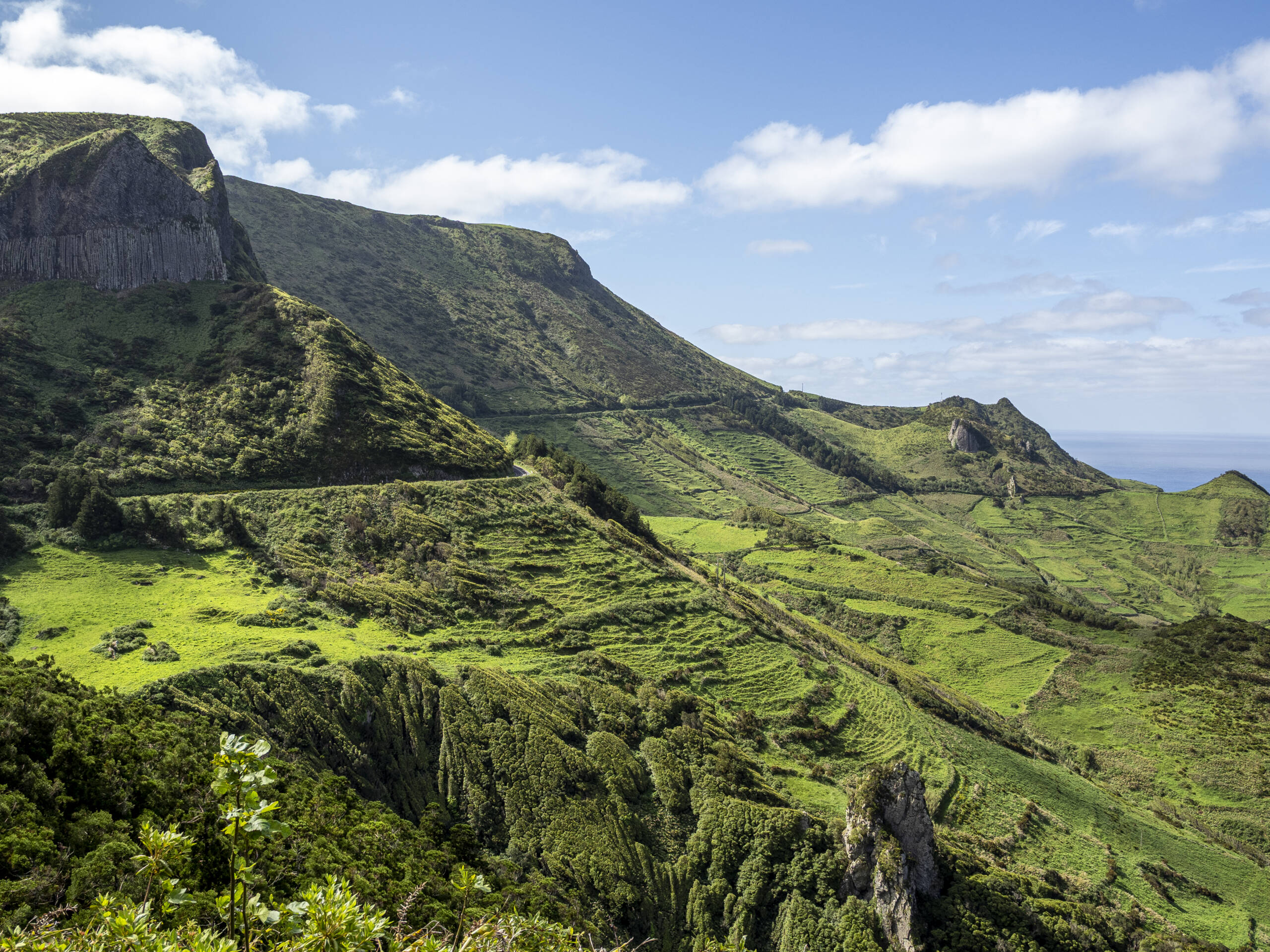
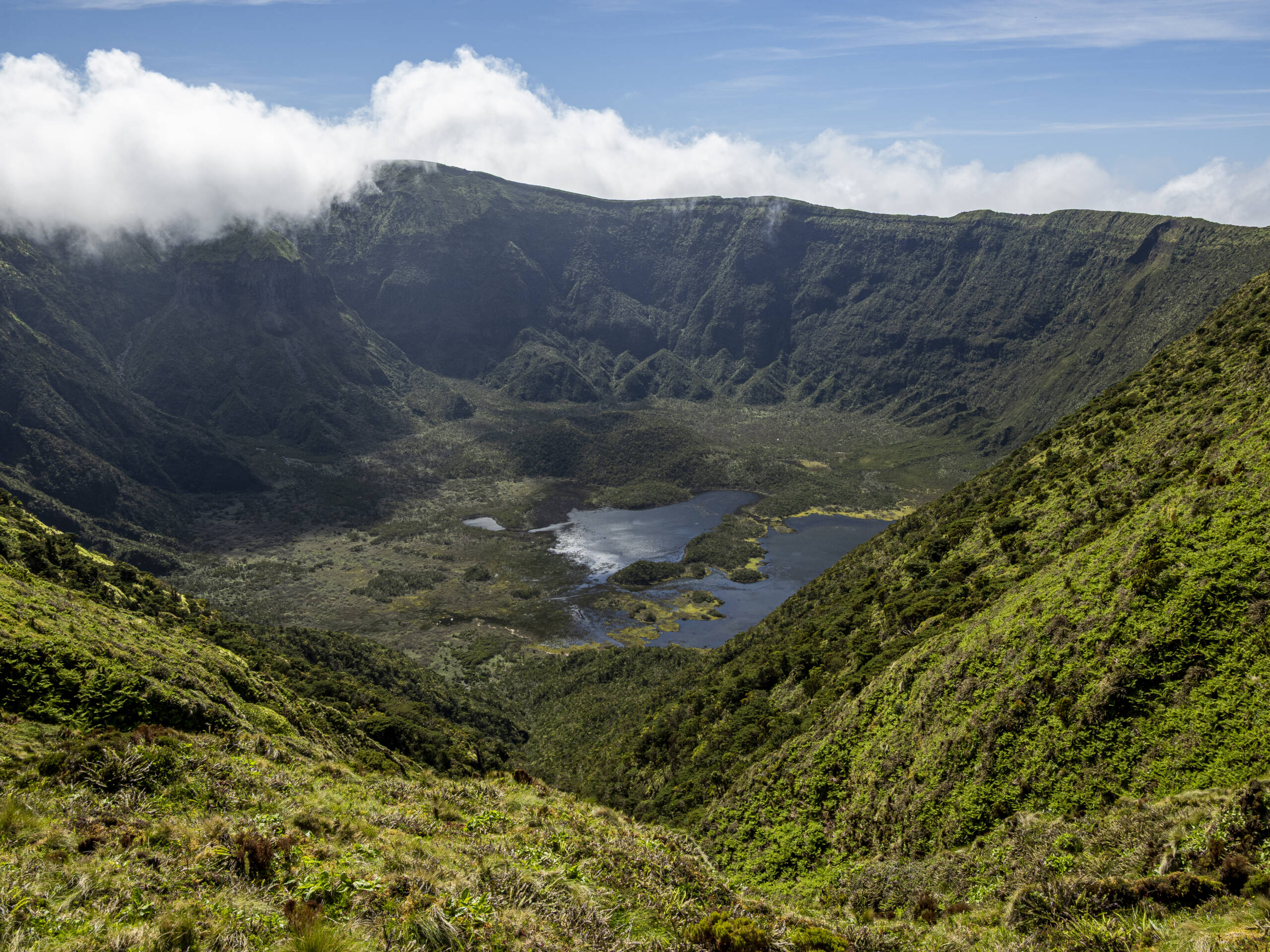
Corvo goes smaller still: about 400 residents, one town, Vila do Corvo, tucked at the base of an extinct volcano. The crater rim is a few hours’ walk from the harbor. Skip the idea of staying overnight because there’s no real hotel infrastructure to speak of. Book a short SATA flight or a private boat from Flores, spend the day on the crater trail and in the village, then head back to Flores before dark.
Pico’s Whale Channel
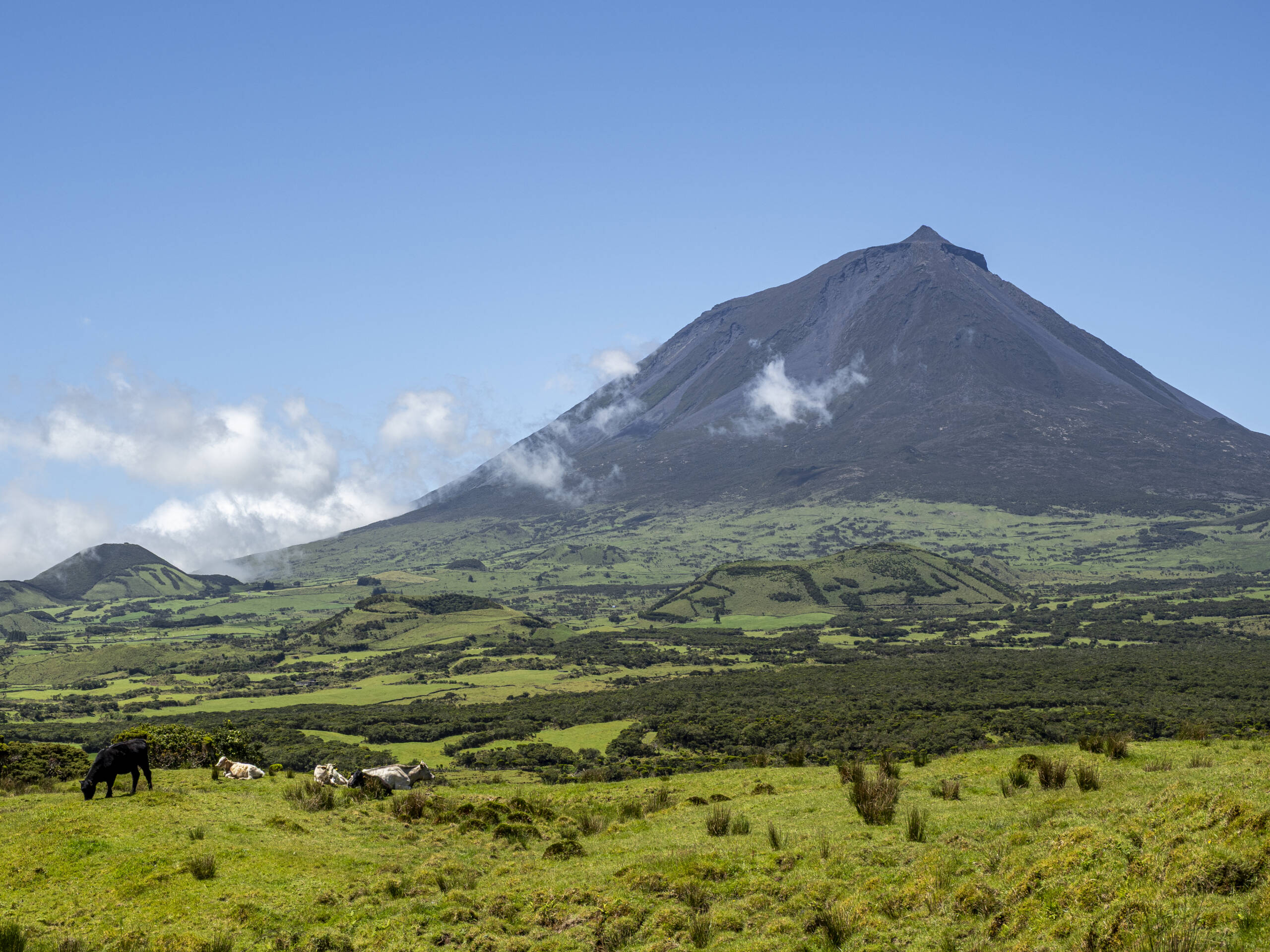
Pico makes the strongest case for routing through here at all. The island sits in the strait between Faial and São Jorge. Lajes do Pico ran a whaling fleet until the 1980s, then turned the same waters into a whale-watching business almost overnight. Espaço Talassa has worked out of Lajes since 1989, and its guides still climb the old vigias, cliffside lookout posts built for spotting whales from land back when harpoon boats waited below. Now a spotter radios coordinates to a tour skipper instead. The channel here drops off fast, close to shore, so sperm whales surface within view of the cliffs in a way most whale-watching destinations simply cannot promise.
Go between May and August specifically, when the odds of a mixed day (sperm whales, dolphins, occasional baleen species passing through) climb noticeably. Portuguese rules keep boats fifty meters back from baleen whales and thirty from sperm whales and dolphins, so be sure to pack binoculars and your zoom lens.
Faial Does the Heavy Lifting
Faial, and its town of Horta, is what actually makes a Flores-Corvo-Pico circuit work. Horta’s marina has served mid-Atlantic sailors for close to a century, and its breakwater is covered wall to wall in murals left by yacht crews mid-crossing, a tradition that hasn’t stopped.
SATA adds extra frequency on the Ponta Delgada-Horta route through peak summer, when demand runs highest, and Faial to Pico takes under fifteen minutes in the air, making Faial a great base. Guests get quick access to the Lajes do Pico launches without sleeping on Pico itself, plus an actual restaurant scene and a proper hotel bed after two nights on smaller islands offering neither.
Access granted
This kind of trip doesn’t plan itself, and honestly it shouldn’t.
Somebody needs to lock the right SATA legs before summer seats vanish, and somebody needs to know, ahead of time, which nights call for a hotel bed and which are better spent moving between islands. That’s what our Travel Designers do, week in and week out, and it’s why they know which stretch of the season gives the best odds across all of these islands at once.
Give the full circuit ten days if the calendar allows: three nights on Flores, a day trip out to Corvo, another three split between Faial and Pico, and a buffer night on either end in Ponta Delgada, because these turboprops get weathered out more than any flight-tracking app will tell you upfront. A shorter version exists too. Drop Corvo, keep Flores and the Pico whale channel, and six days does the job without feeling rushed.
Rate Travel Club has direct relationships across the Azores’ outer islands, including whale-watching operators in Lajes do Pico and the inter-island routing most agents never bother to learn. Connect with our Travel Designers to discover somewhere extraordinary.

Our experts are waiting to help you discover somewhere extraordinary.
You might also like…


Start building my trip
It all starts with a few details, then our travel experts will create an unforgettable experience just for you.

You’re invited to the club
We’re always adding new trip inspiration and exclusive articles. Share your email and never miss out.